


Painting
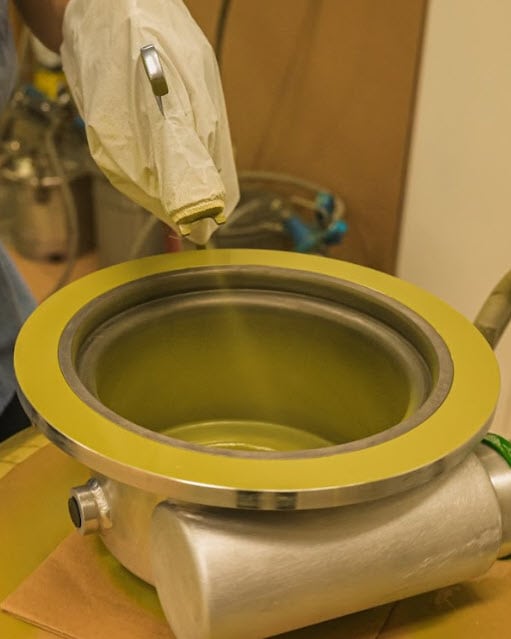
The right coating makes the difference between a part that holds up and one that doesn’t.
At Raphael Industries, we apply that philosophy every time a part comes through our door. Since 1987, we’ve been delivering professional industrial painting services – combining old-school craftsmanship with the process discipline of an ISO 9001:2015 certified shop.
Whether you need a single prototype coated or a steady run of production parts finished to spec, we have the experience, equipment, and flexibility to get it done right.
What is Industrial Painting?
It’s more than color. It’s protection.
Industrial painting is the application of liquid coatings – water-based, solvent-based, or specialty formulations – to manufactured parts and components to protect them from corrosion, wear, chemical exposure, and environmental conditions. Unlike decorative painting, industrial finishing is a technical process. Film thickness, adhesion, cure method, surface preparation, and coating chemistry all determine whether a finish will perform over the long haul.
The choice between water-based and solvent-based coatings isn’t simply a preference – it depends on the substrate, the operating environment, regulatory requirements, and the performance spec your customer demands. A coating that’s right for a stamped steel enclosure going into a controlled indoor environment may be completely wrong for a cast iron component headed into a high-humidity field application.
That’s where experience matters. We help customers select and apply the coating system that fits both the part and the application – not just what’s easiest to run.
Our Painting Capabilities
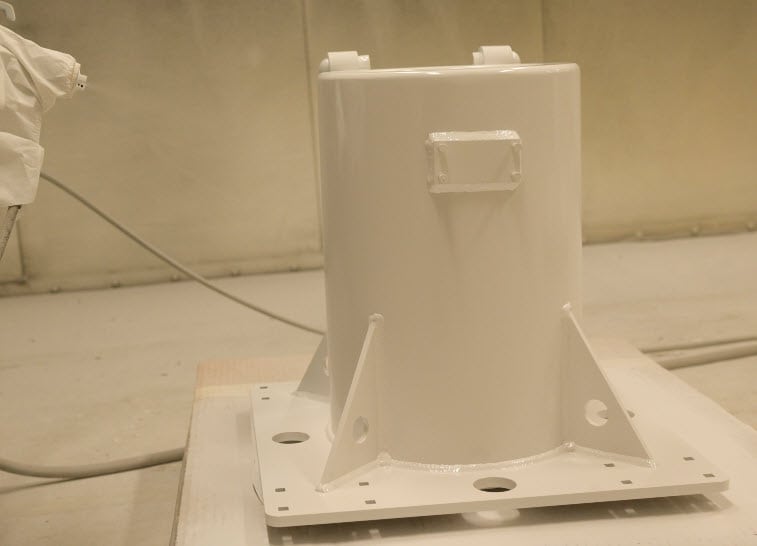
Water-Based Coatings
Water-based coatings use water as the primary carrier for the coating resin, resulting in significantly lower VOC emissions compared to traditional solvent-borne systems. They’re an excellent choice for shops and customers operating under tight environmental compliance requirements, and modern water-based formulations have closed much of the historical performance gap with solvent-based alternatives.
We apply water-based coatings across a range of industrial applications where environmental compliance, worker safety, and finish quality need to work together – not compete.
Typical benefits:
- Lower VOC output, supporting your environmental compliance goals
- Comparable adhesion and corrosion resistance to solvent-based systems in many applications
- Wide color availability including solids, metallic, and matte finishes
Solvent-Based Coatings
Solvent-based coatings use chemical carriers that evaporate during the cure process, producing a film with excellent adhesion, hardness, and resistance to moisture and chemicals. They remain the preferred choice for applications with demanding performance requirements or where humidity and temperature during cure make water-based systems less reliable.
Our team handles solvent-based systems with the proper ventilation, safety protocols, and waste management practices required by OSHA and EPA regulations.
Typical benefits:
- Superior resistance to moisture, temperature extremes, and chemical exposure
- Fast dry times in open-air environments
- Excellent penetration and adhesion on difficult substrates
- Consistent film build in high-performance applications